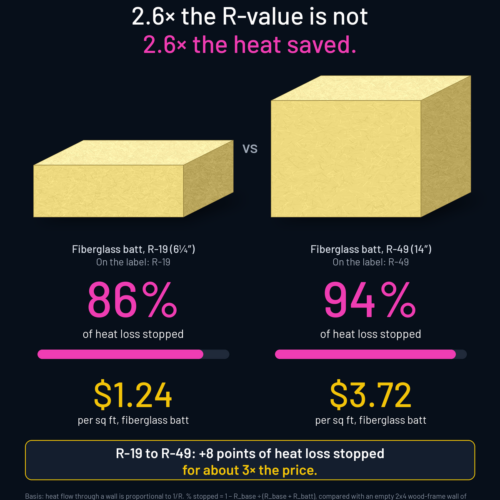
Ask an architect, builder, or homeowner what they want from insulation and the first answer is usually a number: R-30, R-49, R-60. It is a useful number. It is also one of the most over-sold ones in building science, because every additional point of R-value saves less energy than the one before it, and a lot of heat escapes through paths the number never describes.
This is not an argument for under-insulating. Code minimums are a floor, and cold-climate attics in particular reward more R. It is an argument for spending your next dollar where it does the most good.
The math behind diminishing returns
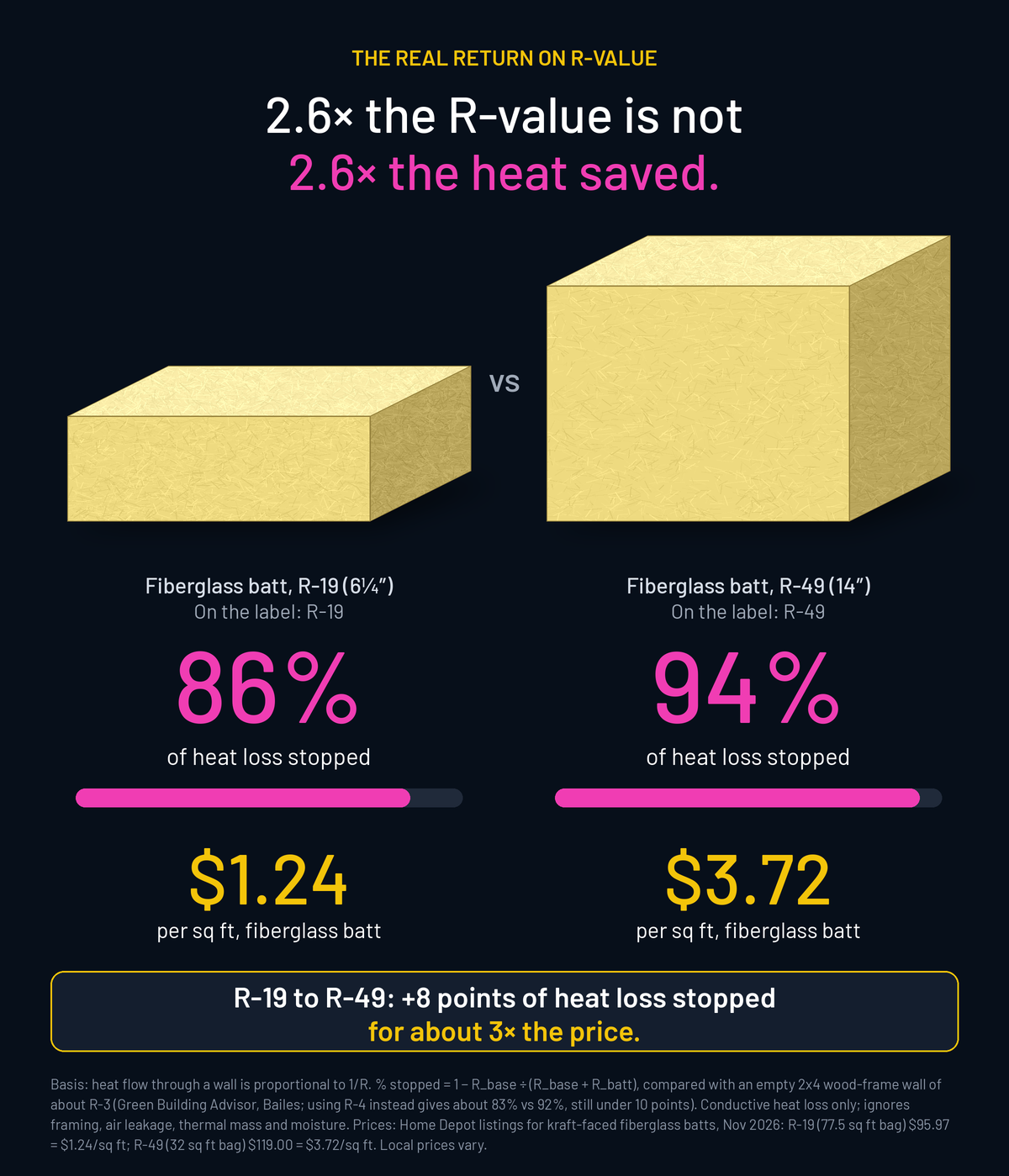
Heat flow through a surface is proportional to the temperature difference divided by R. Put another way, heat loss per square foot per degree is 1/R. That is a curve, not a line, and the curve flattens fast.
| Step up in R-value | Added R | Heat loss avoided by this step (Btu/hr·ft²·°F) |
|---|---|---|
| R-5 to R-10 | +5 | 0.100 |
| R-10 to R-20 | +10 | 0.050 |
| R-20 to R-30 | +10 | 0.017 |
| R-30 to R-40 | +10 | 0.008 |
| R-40 to R-60 | +20 | 0.008 |
Read the last two rows together: doubling the added thickness from R-40 to R-60 saves the same small amount as the single step from R-30 to R-40. The step from R-5 to R-10 does more than all the later steps in this table combined. Once you are past R-20 in a wall, each added increment of R buys a much smaller reduction in heat flow, and you are paying for that thickness in material, framing depth, and (depending on the product) embodied carbon.
The table ignores everything else in the assembly, which is exactly the point of the next section.
Nominal R is not whole-wall R
The R-value printed on a package describes one material, in the middle of a lab sample, under steady conditions. A wall is a mix of paths. Heat takes the easy route through wood studs, headers, plates, and corners, and those parts of the wall insulate far less per inch than the insulation does. This is thermal bridging.
Here is a simple, illustrative parallel-path calculation for a 2×6 wood-frame wall, 5.5 in. deep. The assumptions: 25 percent of the wall area is framing, wood framing is about R-1.25 per inch, and the other layers (sheathing, cladding, drywall, air films) add about R-2.5 on both paths. Insulation fills every cavity perfectly.
| Scenario | Effective whole-wall R | Gain over baseline |
|---|---|---|
| Baseline: R-20 cavity insulation | about R-16.7 | – |
| Add 4 points to the cavity (R-24) | about R-18.2 | +1.5 |
| Add 2 in. of continuous insulation at R-3.25/in (R-6.5) | about R-24.0 | +7.4 |
| Both: R-24 cavity plus R-6.5 continuous | about R-26.0 | +9.3 |
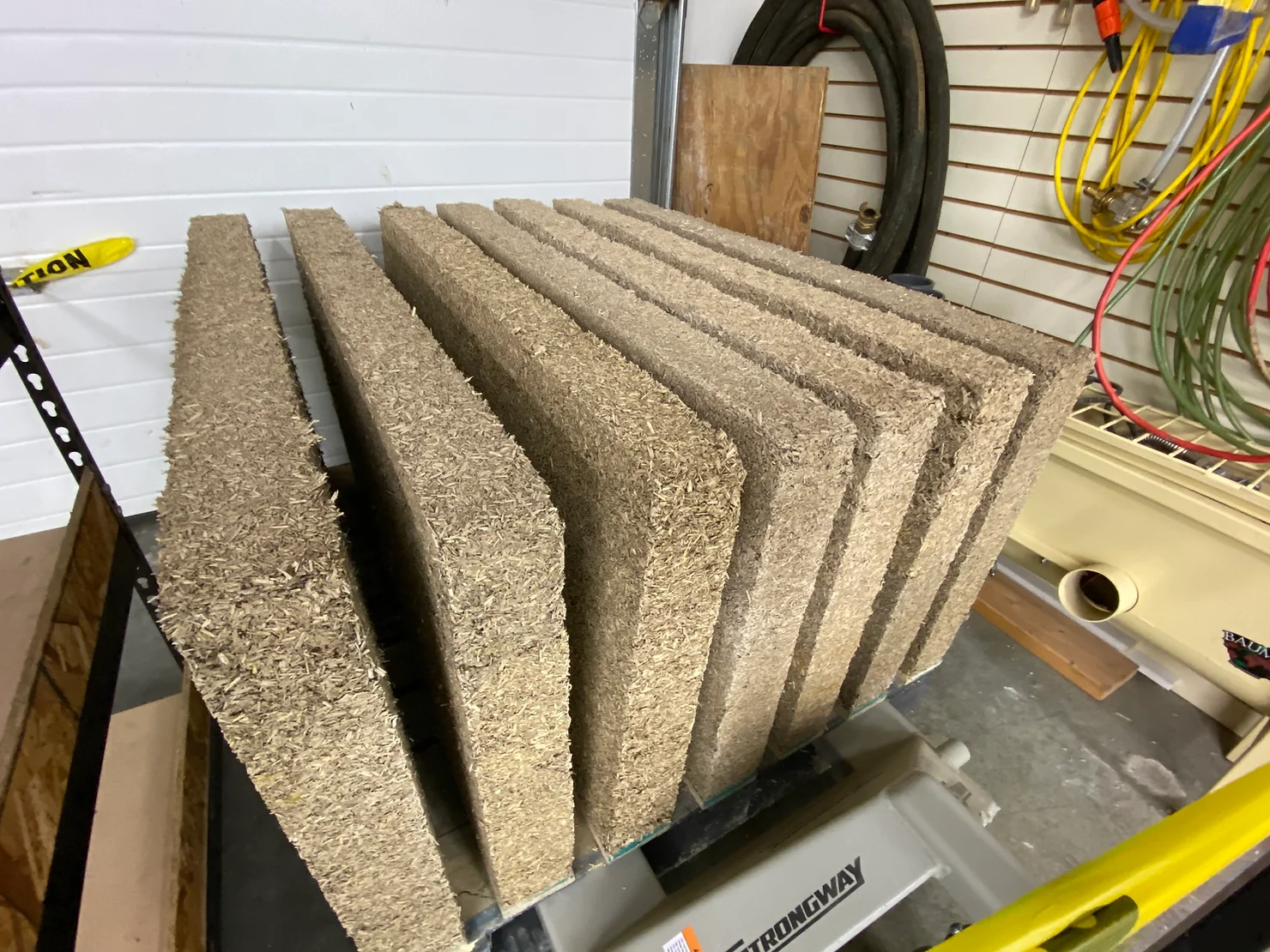
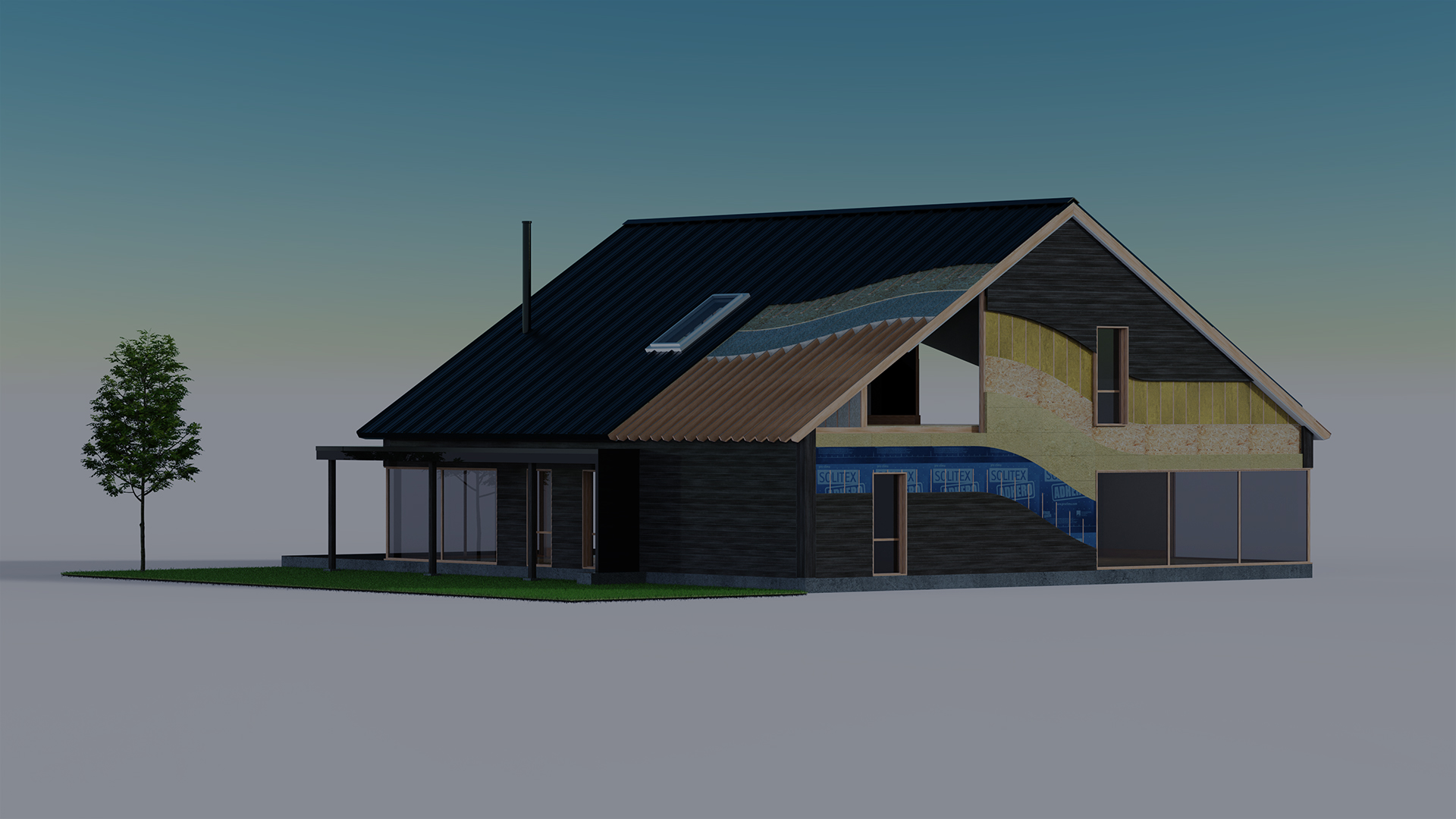
Four more points of cavity R bought about one and a half points of real wall performance. Covering the studs with a continuous layer bought nearly five times as much, and more than the nominal R of the layer itself, because it also takes the framing path out of the equation. That is why we keep recommending split-insulation assemblies, with batts in the cavity and a continuous board outside. PlantPanel X is Hempitecture’s board for that role, listed at R-3.25 per inch, or R-6.5 in the 2 in. thickness used above.
The numbers above are a teaching example, not a design calculation. Real walls have windows, headers, and corners, and your framing fraction will differ. Use a 2D tool such as THERM or an effective U-factor from your energy modeler for a real project.
The other leaks: air and installation quality
Two more things erode rated R without ever showing up on a spec sheet.
- Air movement. Air that leaks through or around insulation carries heat with it and can move far more moisture than vapor diffusion does. A continuous, well-detailed air barrier typically matters more than the last 10 points of R.
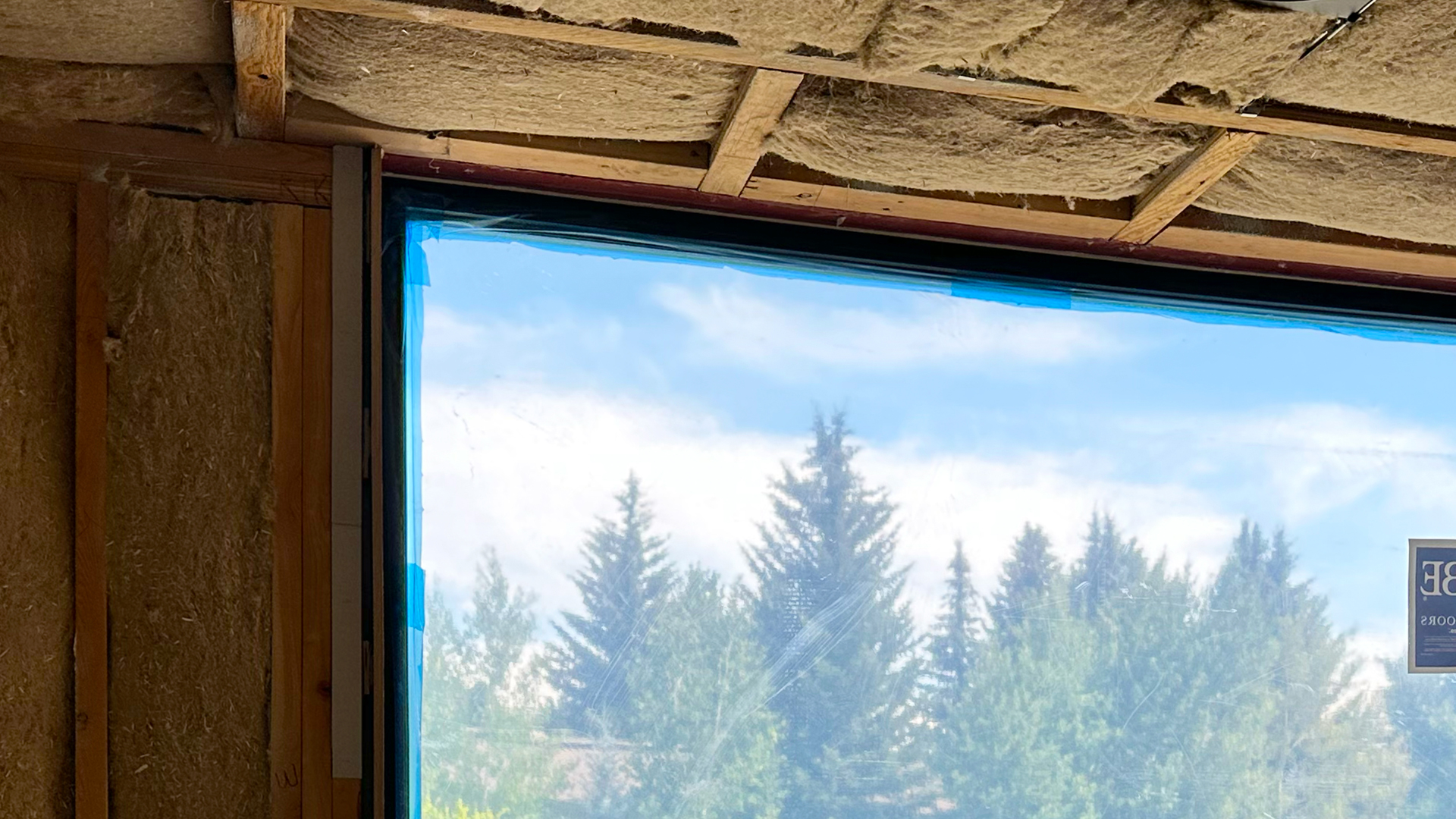
- Gaps and compression. A batt squeezed into a cavity that is too small loses thickness, and a batt with voids at the edges or corners leaves bypass paths. Hempitecture designs HempWool as a friction-fit batt that is made not to slump or sag in the cavity, and the install guidance is to cut it about 1/2 in. oversize so it grips the framing. Either way, the fit is what you are paying for.
R-value is also measured under idealized conditions
Insulation R-values are measured in steady-state tests such as ASTM C518 (heat flow meter) or C177 (guarded hot plate). Real walls see daily temperature swings, solar gain, wind, and moisture moving in and out of materials. Hempitecture and Oak Ridge National Laboratory compared HempWool and fiberglass wall assemblies in ORNL’s Heat Air Moisture (HAM) chamber. The public project reports confirm that testing was done to understand performance relative to commercial cavity insulations, but they do not publish a head-to-head result. Our post on hemp fiber versus wood fiber insulation discusses thermal inertia, phase shift, and moisture management as reasons to look beyond rated R. Treat that as context, not as a substitute for a number.
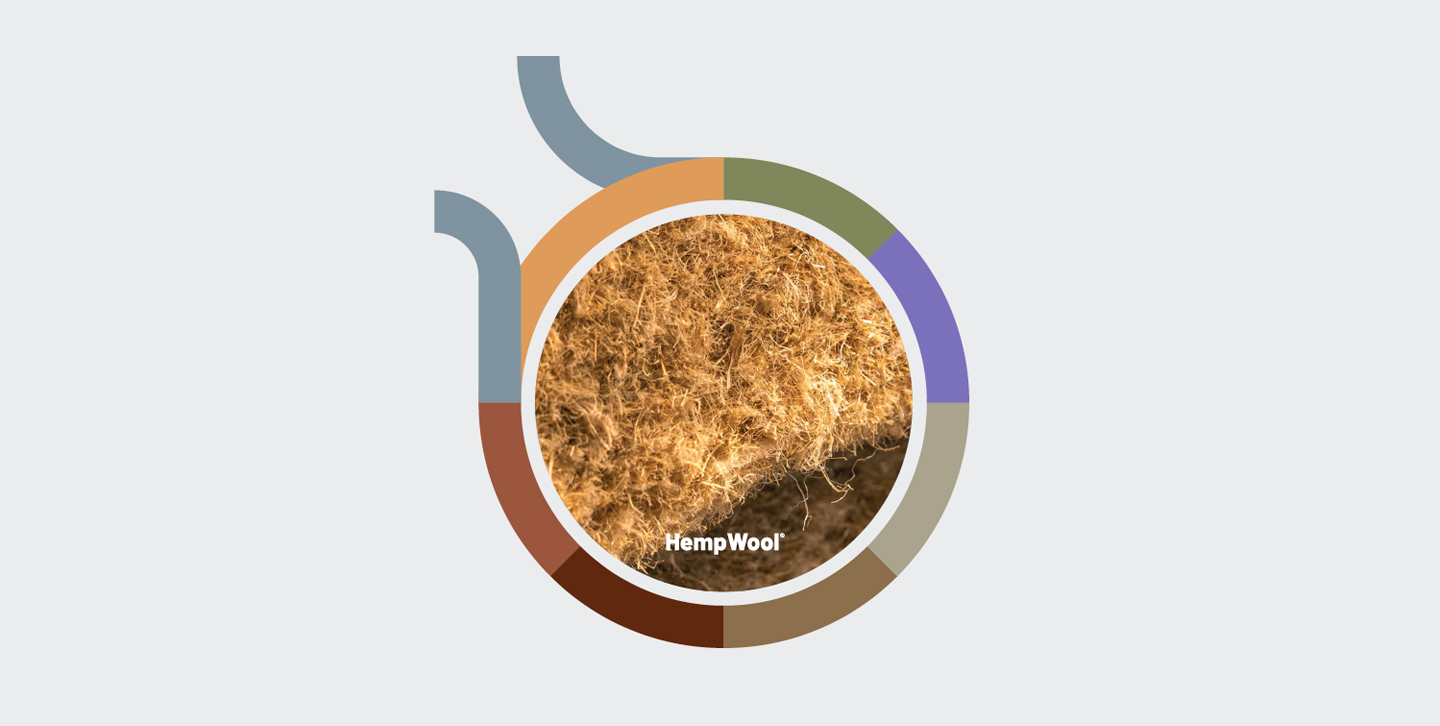
For perspective on per-inch values, HempWool is rated R-3.69 per inch, comparable to fiberglass, mineral wool, and sheep’s wool. That figure comes from testing of HempWool, and final testing of the Idaho-made product is expected in 2027. HempWool is 90% USDA Certified Biobased. Our fiberglass versus bio-based insulation comparison makes the same point: comparable R-values, with differences in handling, moisture behavior, and environmental impact.
Where to spend the next dollar
- Meet the code R for your climate zone first. Confirm the current energy code and local amendments, and remember that attic targets are usually the highest and the cheapest to reach. Some utility rebate programs we cover in our incentives guide require attics to reach R-49.
- Air seal before you add thickness. It is typically one of the cheapest improvements per unit of energy saved.
- Fill cavities completely. Correct width, correct depth, no voids behind wiring and boxes.
- Break the thermal bridges. Continuous insulation, advanced framing, or deeper-wall strategies usually beat adding points to the cavity.
- Stop chasing R per inch. If you need more total R, use a deeper batt or a split assembly rather than hunting for a slightly higher R per inch.
The bottom line
R-value tells you how much resistance a material offers under test conditions. It does not tell you how a whole wall performs, how it handles moisture, or how it behaves over a day. Specify the assembly, detail the air barrier, cover the framing, and then choose materials on health, carbon, and moisture behavior as well as the number. Past a certain R, those other factors are where the real differences are.
Planning an assembly and want to compare options? Contact Hempitecture to talk through cavity and continuous insulation choices for your project.
Sources
- Heat flow through a surface is proportional to 1/R (U = 1/R). The U.S. Department of Energy’s Building Science Education program summarizes this as: the higher the R-value, the more slowly heat flows through the material. See Building Envelope: Heat Flow. Oak Ridge National Laboratory has also documented diminishing energy benefits from added envelope insulation in whole-building simulations: Kosny et al., Dynamic Thermally Disconnected Building Envelopes (Buildings XI, 2010).
- Labeled cavity R is not whole-wall R, because framing and interface details create thermal bridges. See ORNL, The Whole Wall Thermal Performance.
- Air leakage typically moves far more moisture than vapor diffusion. See Building Science Corporation, Air Barriers vs. Vapor Barriers (RR-0004). On air sealing as a high-value first step, see the DOE/ENERGY STAR Consumer Guide to Air Sealing.
- Gaps, voids, and compression reduce installed R-value. See Building Science Corporation / DOE Building America, Installation of Cavity Insulation (Info-501), and the heat-flow overview linked above.
- Steady-state R-value test methods: ASTM C518 (heat flow meter) and ASTM C177 (guarded hot plate).
- Attic targets are among the highest R-values in the code, and ENERGY STAR’s retrofit recommendations, based on the 2021 IECC, go up to R-49 or R-60 depending on climate zone. See ENERGY STAR recommended insulation R-values. Confirm the code edition and local amendments that apply to your project; the 2024 IECC changed some of those numbers.
- HempWool is listed at R-3.69 per inch by ASTM C518, is described as comparable to common cavity insulations, and is designed as a friction-fit batt that will not slump or sag; install guidance is to cut about 1/2 in. oversize. See the HempWool product page, the HempWool technical data sheet, and the HempWool installation guide. The R-3.69 figure comes from testing of HempWool; final testing of the Idaho-made product is expected in 2027. HempWool is 90% USDA Certified Biobased.
- PlantPanel X is listed at R-3.25 per inch and is sold in a 2 in. thickness, for use as continuous insulation in split assemblies. See the PlantPanel X product page and the PlantPanel X technical data sheet.
- The ORNL HAM-chamber comparison of HempWool and fiberglass wall assemblies is documented, without a published numerical result, in Hempitecture and ORNL, CRADA Final Report NFE-21-08879 (ORNL/TM-2024/3642), and in the 2023 DOE Building Technologies Office poster, Hempitecture: Energy-efficient, Carbon-negative, Bio-based insulation.
- Lawrence Berkeley National Laboratory’s THERM is a 2D heat-transfer tool commonly used for detailed assembly calculations.